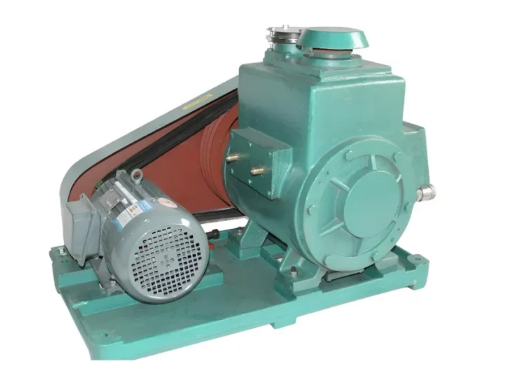
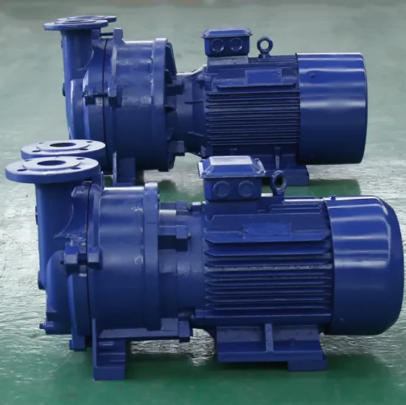
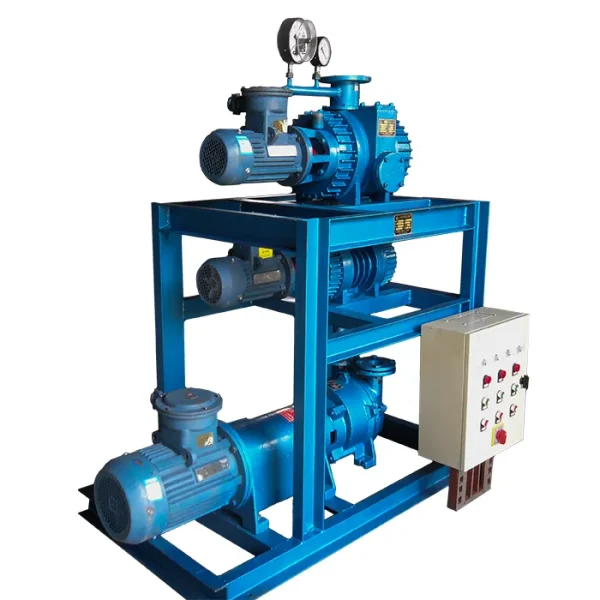
A screw vacuum pump has screws that fit together to move gas. It makes a vacuum without using oil, so it is good for clean places. This pump is special because it uses the Archimedes screw idea. This lets it work with many gases and some small particles. The world market for oil sealed screw vacuum pumps was about $1.2 billion in 2023. It might grow to $2.3 billion by 2032. This shows that many people want this technology. Many industries pick this pump because it works well and does not cause contamination.

Screw Vacuum Pump Operation
Main Components
A screw vacuum pump has important parts that work together. These parts help make a vacuum.
- There are two screw rotors inside a strong case. The rotors spin in opposite ways and fit close together. This traps and squeezes gas in the chamber.
- A motor gives power to the screw rotors. The motor helps the pump run smoothly.
- Shaft seals stop gas from leaking out. The seals help keep the vacuum strong.
- Cooling and lubrication systems keep the pump from getting too hot. They also help moving parts last longer.
Each part does something special. The rotors move the gas. The motor gives power. The seals keep the vacuum tight. The cooling and lubrication systems help the pump work for a long time.
How It Works
A screw vacuum pump uses the positive displacement rotary principle. The pump traps gas between the screw threads and the pump casing. When the screws turn, they move the gas along the screws. This pushes the gas forward in a steady way.
Twin screws are very important in this process. They spin but do not touch each other. This means less wear and a longer life. The screws make sealed spaces that carry gas from the inlet to the outlet. The pump can handle many fluids, even ones with solids or thick liquids. The flow stays smooth and does not pulse. This helps protect sensitive materials.
The pump can run at different speeds. At low speed, it moves things gently. At high speed, it can clean itself. The design lets the pump run dry for short times without damage.
Tip: Changing the screw pitch can change how much gas the pump moves and how much pressure it makes. This makes the pump good for many jobs.
Vacuum Creation
The pump makes a vacuum by trapping and moving gas. Here is how it works:
- Two screws spin inside the chamber. One is left-handed and one is right-handed.
- Gas comes in at the inlet and gets trapped between the screws.
- The screws turn in opposite ways and push the gas into a smaller space.
- As the space gets smaller, the gas gets squeezed and moves to the outlet.
- This squeezing lowers the pressure at the inlet and makes a vacuum.
Screw vacuum pumps can be oil-sealed or oil-free (dry). Oil-sealed pumps use oil to help moving parts and seal them. This helps the pump reach deeper vacuum levels and reduces wear. But oil-sealed pumps need oil changes and careful oil disposal. They are used where cost and proven technology are important.
Dry screw vacuum pumps do not use oil in the compression chamber. They use very exact parts and special designs to keep the vacuum tight. These pumps are best for clean jobs, like making medicine or electronics, where oil could cause problems. Dry pumps cost more at first but need less care and do not make oil waste.
| Feature | Oil-Sealed Screw Vacuum Pumps | Oil-Free (Dry) Screw Vacuum Pumps |
|---|---|---|
| Lubrication & Sealing | Use oil inside the chamber for lubrication and sealing. This reduces backflow and helps make a vacuum. | Work without oil in the chamber. They use exact spaces and special designs for sealing and squeezing. |
| Vacuum Level | Usually reach deeper vacuum levels at a lower starting cost. | Can reach high vacuum levels but often cost more at first. |
| Maintenance | Need regular oil changes and safe oil disposal. Buying oil adds to costs. | Need little fluid care. No oil changes or disposal needed. This lowers maintenance and helps the environment. |
| Contamination Risk | Higher risk because oil vapors and leftovers can contaminate the process. | Much lower risk since no oil is in the chamber. Good for sensitive jobs. |
| Environmental Impact | Oil disposal must be handled carefully to follow rules. | Better for the environment since no oil disposal is needed. |
| Initial Cost | Usually costs less at first. | Usually costs more at first. |
| Operating Costs | Higher because of oil use and disposal. | Lower daily costs, but repairs may be harder and cost more. |
| Typical Applications | Used in cars, HVAC, labs, and food packaging. | Used in medicine, electronics, food processing, and medical devices needing clean vacuum. |
| Noise & Heat | Usually quieter and cooler. | May make more noise and heat depending on design. |
A dry screw vacuum pump can reach a vacuum level of about 3.7 x 10^-4 Torr. This makes it good for jobs that need very low pressure. The pump also works well at higher pressures, so it can do many tasks.
Screw Vacuum Pump Types
Dry vs. Oil-Sealed
Screw vacuum pumps have two main types. These are dry and oil-sealed. Each type is good for different jobs.
Dry screw vacuum pumps do not use oil inside. Their system does not cause abrasion. This means no oil can get into the vacuum. That is important for clean places and careful work. Dry pumps help the environment because they do not make dangerous waste. They use less energy since their parts do not touch. This lowers friction and saves electricity. It is easier to take care of dry pumps. There are fewer parts to clean or fix. For example, a food company started using dry screw pumps. Their production got 20% faster. Maintenance dropped by 30%. There was no more oil contamination.
Oil-sealed screw vacuum pumps use oil to seal and cool. This helps them make a deeper vacuum. The pump works smoothly with oil. But oil-sealed pumps need oil changes often. Used oil must be thrown away carefully. Oil can leak and cause contamination. These pumps usually cost less at first. But they may cost more later because of maintenance and waste.
Note: Dry screw vacuum pumps can handle liquids and solids better. They work great in very clean places and with tough gases.
Environmental and Maintenance Benefits
- Dry screw pumps stop oil contamination.
- They lower downtime and save on maintenance.
- No dangerous waste needs to be thrown away.
- They use less energy and help the planet.
- They last longer because there is less damage.
Variable Speed Drive (VSD) Technology
Variable speed drive (VSD) changes how fast the pump goes. This lets the pump work at the right speed for each job. VSD makes the pump use less energy and be quieter. It helps save power and supports green work. Pumps with VSD keep oil inside at all pressures. This lowers harm to the environment.
Single vs. Twin Screw
Screw vacuum pumps can have one screw or two screws. Each kind has special things it can do.
| Aspect | Single Screw Pump | Twin Screw Pump |
|---|---|---|
| Structure | Has one screw and a soft stator | Has two screws that do not touch, making sealed spaces |
| Conveying Medium | Good for gas, thick liquids, and fluids with solids | Moves liquids with gas and sand mixed in |
| Flow Characteristics | Flow is steady and changes with speed | Flow is smooth, with little noise or shaking |
| Self-Priming Ability | Can start pumping by itself | Can handle lots of gas and sand |
| Bearing and Lubrication | Not needed | Has outside bearings and its own lubrication |
| Temperature Control | Not needed | Has heating jackets to control temperature |
| Mechanical Seals | Not needed | Uses seals for long life |
| Dry Running Capability | Not needed | Can run dry for a short time without harm |
| Application Focus | Works with many fluids, good for moving gas | Best for moving liquids in oilfields, ships, and chemical plants |
| Installation Flexibility | Can be put in tilted positions | Can be set up in many ways |
| Noise and Vibration | Makes little noise | Makes little noise and shakes less |
Single screw pumps are good for moving gas and thick liquids. They give steady flow and can handle fluids with solids. Twin screw pumps have two screws that do not touch. This makes sealed spaces for smooth flow. Twin screw pumps can run dry for a short time. They can move mixtures with gas and sand.
Tip: Twin screw pumps can pump faster and start by themselves better than single screw pumps.
Example Series
- The JZJLG series roots screw vacuum pump unit uses a screw pump and a roots pump together. It gives high vacuum and fast pumping for factories.
- The LGBJ series screw vacuum pump has two screws. It works without oil and is good for clean and tough jobs.
Applications
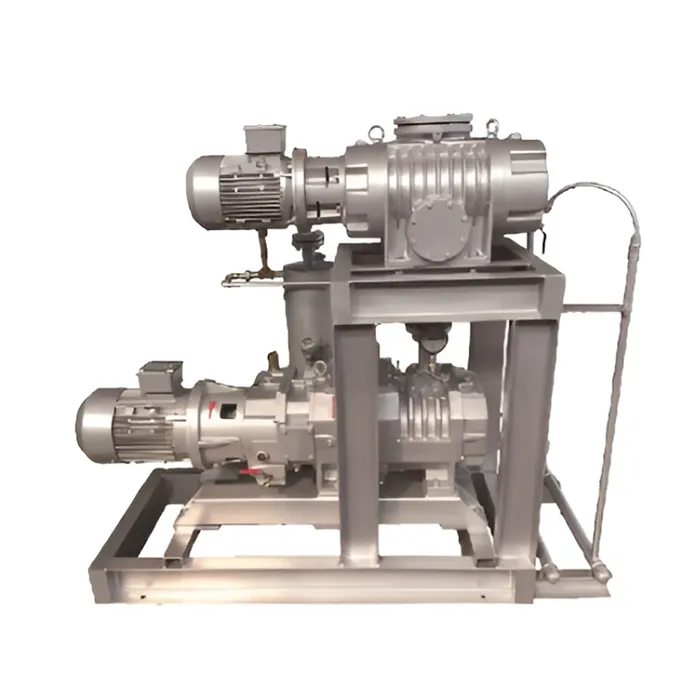
Industrial Uses
Screw vacuum pumps are important in many industries. They help with heat treatment and metallurgy. They are used for coating and making solar panels. These pumps also help with drying things. They can handle tough jobs and lots of vapor or liquid. Factories use them to move sensitive materials. They help seal packages and control chemical reactions. The pumps work well where contamination must be low.
| Industrial Application Category | Typical Applications | Screw Vacuum Pump Relevance |
|---|---|---|
| Material Handling | Lifting, moving, placing, and holding sensitive things | Good for handling sensitive materials |
| Packaging | Vacuum sealing, shaping, moving packaging, picking and placing | Best for picking, placing, and clean packaging |
| Manufacturing | Chemical work, electronics, and food making | Used for clean chemical and food work, and electronics |
| Controlled Processes | Removing gas, distilling, and drying | Used when a controlled vacuum is needed |
The JZJLG series roots screw vacuum pump unit is used in these places. The LGBJ series screw vacuum pump is also common. They give strong performance and help with hard jobs.
Laboratory Uses
Labs use screw vacuum pumps for many jobs. These pumps help filter mixtures and remove extra fluids. They help evaporate solvents. Scientists use them to find leaks and check vacuum gauges. Screw pumps help with membrane filtration and aspiration. They are used for rotary evaporation too. They help remove gas from liquids and freeze dry samples. Labs use both big and small screw pumps.
Tip: Screw vacuum pumps help keep labs clean and safe. They do not cause oil contamination.
Specialized Scenarios
Some industries need vacuum pumps for special work. Aerospace companies use them for testing and making things. Semiconductor factories need them for cleanroom work. Petrochemical plants use screw pumps for vapor recovery and distillation. These pumps can handle tough gases and solids. Their design lets them work where other pumps cannot.
Advantages and Challenges
Benefits
Screw vacuum pumps have many good points for factories and labs. Dry screw vacuum pumps last a long time and work well. Many people pick these pumps because they help things run without stopping. They do not need many repairs. The oil-free design keeps things clean. This is great for medicine and electronics.
- Oil-free pumps keep things clean. No oil or water gets inside.
- Two screws spin in different ways. They trap and squeeze gas but do not touch. This stops dirt from getting in.
- Little wear and no oil mean lower costs.
- The pump saves energy but still works well.
- Small size makes it easy to fit in tight places.
- Less noise means the work area is quieter.
- Strong build helps the pump last for years.
| Feature | Explanation |
|---|---|
| Oil- and contact-free operation | Screws spin but do not touch each other or the case. This keeps things clean. |
| Single-piece cast screws | There are no gaps. This stops rust and buildup. |
| Self-balancing screw design | The pump shakes less and makes less noise. It also saves energy. |
| Efficient water cooling | Water keeps the pump cool and stops rust. |
| Energy-saving modules | The pump uses less power when not working hard. |
| Minimal maintenance | Less wear means less time fixing the pump. |
Tip: Many people use screw vacuum pumps because they are reliable, clean, and save energy.
Limitations
Screw vacuum pumps also have some hard parts. They cost a lot to buy and set up. This can be tough for small companies. The pumps are tricky to make and need good materials. This makes them more expensive. Fixing them is hard because the inside is complex. You need skilled workers and special parts. This takes more time and money.
- You must check and fix the pump often. Parts that spin and seals can wear out.
- The pump does not like rough or harsh fluids. This limits what it can do.
- Dirt and solids in the fluid can hurt the pump. This makes it work less well and not last as long.
- Very hot or cold places can damage seals and parts. You need to be careful.
- The spinning screws can make friction. Sometimes this uses more energy.
Note: People should check what fluids they use and how the pump will work. This helps stop problems with dirt or strong chemicals.
Maintenance
Basic Steps
Taking care of screw vacuum pumps helps them last longer. Workers look at drive belts and couplings for cracks or oil on them. They make sure the belts are tight and change any broken parts. Oil gets changed every 3,000 hours or sooner if needed. Technicians watch the oil’s color and how clear it is. They check the oil level and put in new filters when they change the oil. Bearings are checked for strange sounds, getting too hot, or shaking. If bearings are worn out, they must be replaced to stop the shaft from moving wrong. Every 3,000 hours, workers take apart the pump to look at the screws and rotors. They clean inside and change any worn parts in pairs. Cleaning means taking off the pump covers, scrubbing the screws with cleaner, and rinsing with water. All parts are dried to stop rust. Workers look at seals and gaskets for leaks or damage and change them right away. After putting the pump back together, they test it and listen for odd noises.
| Maintenance Aspect | Recommended Routine Steps |
|---|---|
| Drive Belts and Couplings | Look for cracks, shiny spots, or oil; make belts tight; change if broken. Check couplings for wear or cracks. |
| Oil Changes and Inspection | Change oil every 3,000 hours; watch oil color and clearness; check oil amount; put in new filters with oil changes. |
| Bearings | Listen for noise, check for heat or shaking; change if worn. |
| Internal Inspection | Take apart and check screws/rotors every 3,000 hours; change worn parts in pairs; clean inside. |
| Ultimate Vacuum Test | Close the inlet, run the pump, check vacuum and motor power; write down numbers to spot changes. |
Tip: Cleaning the pump’s outside and making sure flange holes line up helps stop leaks and keeps the pump working well.
Performance Tips
Workers can help pumps last and save money by using smart steps. They do oil changes and put in new filters to keep pumps strong. In dusty or harsh places, they do more checks to stop damage. Picking the right pump for each job helps avoid extra repairs. Doing regular care is like saving money because it stops big problems. Technicians use tools to check vacuum pressure, shaking, and heat. Special technology looks at live data and finds problems early. This lets workers plan fixes and stops surprise breakdowns. Staff write down what happens to track problems and plan service times. Training workers helps them take care of pumps and fix small issues. Pumps with safety features and filters help stop breakdowns and keep things clean.
Note: Smart vacuum pumps with special software can find problems before they get bad. This helps factories and labs save money and keep their tools working.
Screw vacuum pumps move gas but do not use oil. This makes them great for clean places like labs. They work without oil, need little care, and are strong. People should look at the gas, temperature, and how fast the pump goes before picking one. Cleaning and checking the pump often helps it last longer. New pump designs seal better and use less energy. Picking the best pump and doing regular care keeps it working well and saves energy.