A vacuum pump for thermoforming removes air from between a heated plastic sheet and the mold. The pressure difference presses the sheet against the tool while the plastic is still soft. For a machine making trays, takeaway containers, or plastic housings, the pump and the vacuum circuit must reach the forming pressure within the time that the sheet can still take the required shape.
How Vacuum Shapes a Heated Plastic Sheet
The machine clamps the sheet, heats it until it becomes pliable, and brings it into position over or around the mold. When the forming valve opens, air leaves the space beneath the sheet through small openings in the tool. Atmospheric pressure on the exposed side pushes the sheet against the mold. The part cools on the tool before it is released and trimmed.
The same process can produce shallow food trays, deeper takeaway containers, or shaped equipment covers. Each tool presents a different volume to evacuate. Cavity depth, the number of cavities, and the position and condition of the vent holes also affect how readily air can escape.
Why Pump-Down Time and Vacuum Stability Matter
A forming machine may run a full cycle that includes heating, forming, cooling, and unloading. Pump selection depends on the shorter time available for drawing the sheet onto the mold. Ask the machine builder for the target absolute pressure at the tool and the time allowed to reach it. A catalog figure for ultimate pressure cannot tell you how fast the installed vacuum circuit will reach that point.
Check the vacuum reading near the mold during a series of normal production cycles. The pump may pull a receiver down to its setpoint before the first shot, yet the receiver may recover too slowly when successive shots are closer together. On shared systems, simultaneous demand from several stations can also affect the pressure available when a forming valve opens.
What to Check When the Sheet Misses Mold Details
- Slow pressure drop on every shot. Check the forming valve, hose size and condition, tool vents, and the seal around the sheet. A leak or restriction between the tool and the pump can slow evacuation.
- Good first shot, weaker later shots. Compare the receiver pressure immediately before each cycle. Note the recovery time and whether another station draws vacuum at the same moment.
- Target pressure reached, poor detail persists. Check heating uniformity, sheet temperature, tool vent placement, and forming timing. A gauge reading at the vacuum manifold can miss trapped air in a particular corner of the tool.
Vacuum Pump Options for One or Several Stations
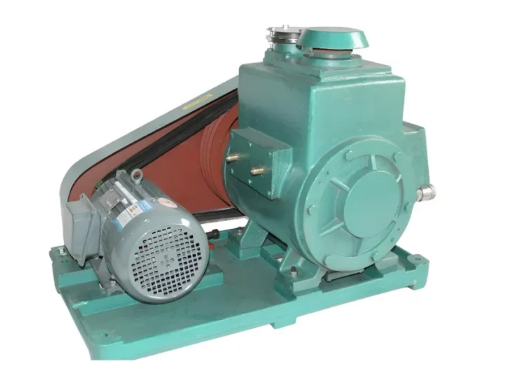
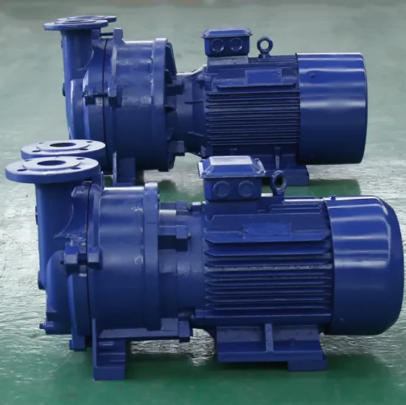
BOJIE lists vacuum forming among the uses for its 2XZ direct-driven rotary vane vacuum pump. For a dedicated machine, compare the pump’s capacity at the required working pressure and confirm that the suction stream is compatible with the pump and oil. The BOJIE 2X rotary vane range is another starting point for a dedicated circuit. Ask about inlet protection if the process releases dust or other contamination.

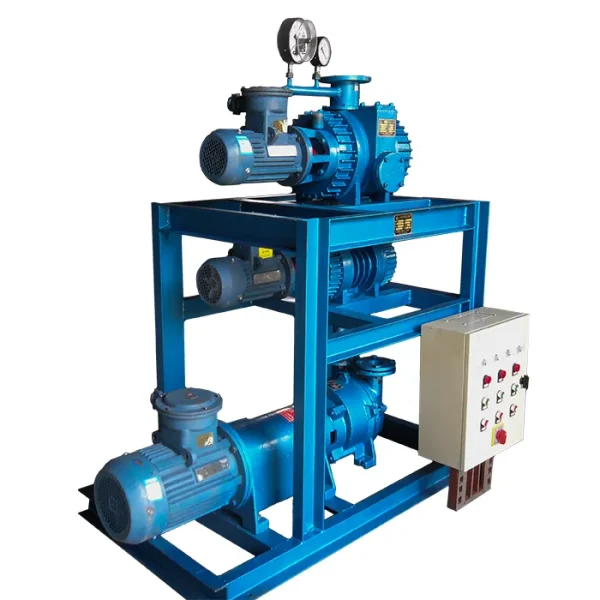
For several stations, the BOJIE ZF vacuum pump station is an example of a system with a vacuum receiver. For this type of layout, check how much vacuum is available during overlapping shots and how long the receiver takes to recover. Confirm the working pressure and the flow available at the furthest tool before selecting the system.
What to Send With a Pump Inquiry
- Mold and part details. Share the mold dimensions, cavity count and depth, sheet material and thickness, and the volume to be evacuated if known.
- Pressure and cycle timing. Include the target absolute pressure at the tool, the time allowed for evacuation, and the normal production cycle time.
- Station count and vacuum layout. List the active stations and which can form at the same time. For an existing machine, include the pump model, pipe sizes, any receiver capacity, and a pressure reading taken during production.
Share these details when you request a vacuum pump quote from BOJIE. They give the supplier a basis for checking whether a vacuum forming pump can meet the pressure and recovery time your machine requires.