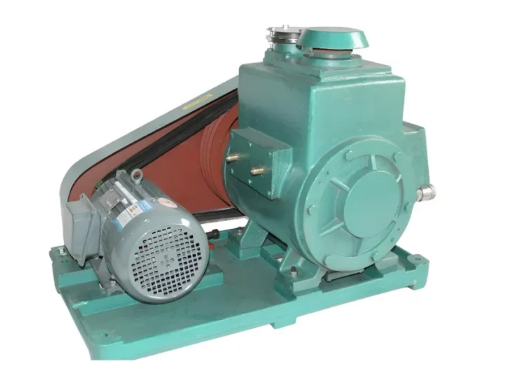
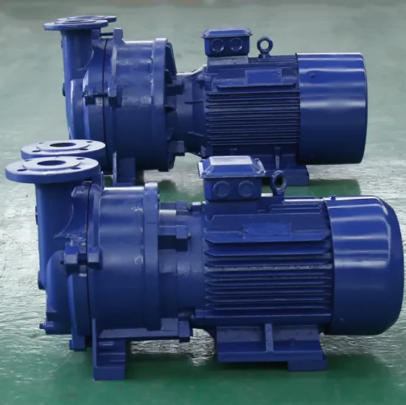
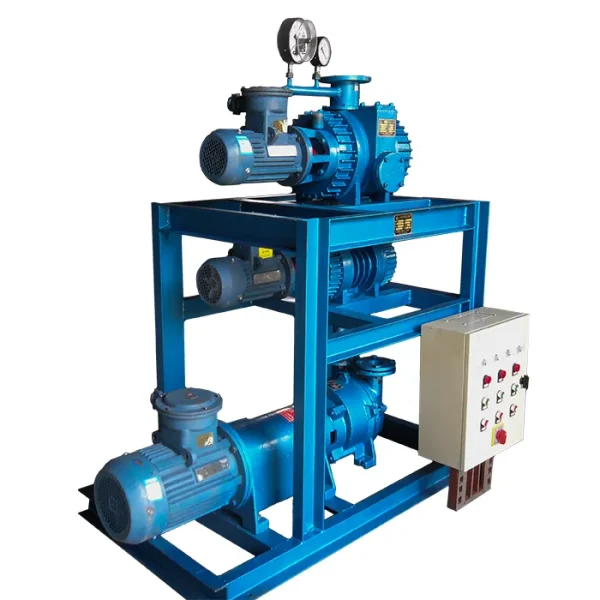
Cavitation in liquid ring vacuum pumps is a common and destructive phenomenon that compromises pump efficiency, shortens equipment life, and increases maintenance costs. Often overlooked during routine design and operation, cavitation can lead to irreversible damage to internal components such as impellers, shafts, and casings.
This article analyzes the causes and contributing factors of vacuum pump cavitation, particularly in liquid ring systems, and presents practical strategies for prevention, control, and system optimization.

What is Cavitation in Liquid Ring Vacuum Pumps?
Cavitation refers to the formation and subsequent collapse of vapor bubbles within a liquid when local pressure falls below the liquid’s vapor pressure. In a liquid ring vacuum pump, this typically occurs when the suction pressure is too low or the sealing liquid becomes overheated.
When cavitation bubbles collapse inside the pump chamber, they generate intense shockwaves. These microscopic explosions can erode the metallic surfaces of the impeller and other critical components, causing pitting, vibration, noise, performance drop, and eventually catastrophic failure if unaddressed.
Causes of Cavitation in Liquid Ring Vacuum Pumps
a. Excessively Low Suction Pressure
Liquid ring vacuum pumps rely on a stable suction pressure to ensure continuous flow and fluid compression. When the inlet pressure drops too low—approaching the vapor pressure of the sealing liquid—vaporization occurs within the pump. This triggers cavitation.
Low suction pressure is often the result of:
- Excessive system resistance (long pipelines, sharp bends, clogged filters)
- Poor NPSH (Net Positive Suction Head) conditions
- Incorrect system sizing or misapplication
b. Overheated Sealing Liquid
The sealing liquid (typically water or oil) serves to form the liquid ring, seal the chamber, and absorb compression heat. If it overheats—whether due to friction, lack of cooling, or recirculation without temperature control—its vapor pressure rises, making it easier for vapor bubbles to form under normal pressure conditions.
As the temperature increases, the pressure required to induce cavitation decreases significantly.
c. Flow Rate Fluctuations
Unstable flow rates can lead to pressure pulses within the pump cavity. These fluctuations create transient low-pressure zones that momentarily cross the cavitation threshold, especially in variable demand systems or in operations with poorly tuned control loops.
Frequent flow variation also increases the mechanical stress on the pump, compounding cavitation effects.
d. Solid Particles in the Liquid
The presence of suspended solids, rust, or abrasive materials in the sealing liquid or process fluid contributes to surface degradation and promotes localized pressure drops. Solid particles can interfere with smooth flow in the impeller area, causing turbulence and micro-pressure variations that trigger vapor bubble formation.
How to Prevent Liquid Ring Vacuum Pump Cavitation
Preventing cavitation in liquid ring vacuum pumps isn’t a one-time fix—it requires a well-rounded and proactive strategy that takes into account operating conditions, liquid properties, system design, and installation accuracy. When managed correctly, you not only avoid performance loss and equipment damage but also significantly extend the lifespan of your vacuum pump system.
A key starting point is to maintain stable and adequate suction pressure. The pump should be installed as close as possible to the process source to reduce the suction lift. Long, narrow, or sharply bent pipelines add unnecessary resistance and lower inlet pressure, which increases the risk of cavitation. Choosing larger diameter piping and smoother flow paths helps reduce these losses. Installing a vacuum gauge at the pump inlet is a smart move—it enables real-time monitoring of pressure conditions so that any dangerous drops can be caught early. Also, don’t overlook system leaks. Even small air leaks can lead to turbulence and sudden pressure drops that destabilize pump operation.
Equally important is controlling the temperature of the sealing liquid. Liquid ring pumps depend on the sealing liquid not just for sealing, but also for heat absorption. If the liquid overheats, its vapor pressure rises, making cavitation more likely. To counter this, many systems are equipped with cooling jackets or external heat exchangers that help keep the liquid within a safe temperature range. It’s also a good idea to limit how often the sealing liquid is recirculated without cooling, as every cycle adds thermal energy. Integrating temperature sensors and warning systems ensures that rising heat levels won’t go unnoticed. In hotter environments, selecting sealing liquids with a higher boiling point can offer an extra layer of protection.
Beyond operation and temperature management, equipment design also plays a crucial role in resisting cavitation. Modern liquid ring vacuum pumps often include cavitation protection ports that relieve internal pressure and allow trapped vapor to escape before causing damage. Using materials like stainless steel for impellers or applying hardened surface coatings helps resist the long-term effects of erosion. Additionally, design enhancements such as balanced shafts and impellers, or dual-chamber configurations, improve flow uniformity and reduce internal stress, making the pump more stable during variable load conditions. If you’re purchasing a new unit, always check whether it includes such anti-cavitation design features—particularly if the application involves deep vacuum levels or elevated liquid temperatures.
Lastly, don’t underestimate the importance of proper installation and startup procedures. Even the most advanced pump can suffer if it’s installed incorrectly. Make sure inlet and outlet lines are vertically aligned to prevent vapor pockets. Before startup, always pre-fill the pump with sealing liquid to avoid dry operation, which can lead to immediate cavitation damage. Flow regulation should be done externally—never throttle the inlet directly. And where possible, a gradual motor speed ramp-up using a variable frequency drive (VFD) or soft starter can help avoid sudden pressure shifts that trigger cavitation at startup.
Practical Operating Tips and Technical Improvements
Long-term cavitation prevention is more than just a one-time setup. It requires continuous monitoring, predictive maintenance, and adherence to proven operational practices.
Operational Best Practices
- Monitor suction pressure and sealing liquid temperature routinely.
- Clean filters and strainers regularly to prevent restrictions.
- Avoid frequent on/off cycling, which stresses the system thermally and hydraulically.
- Use high-quality sealing liquids—preferably free of suspended solids, with controlled chemical composition.
- Train operators to recognize early signs of cavitation (noise, vibration, performance loss).
Technical Upgrades for Long-Term Reliability
- Install variable frequency drives (VFDs) for flexible speed control and smooth operation.
- Add smart sensors for pressure, flow, and vibration to detect early anomalies.
- Use real-time SCADA monitoring to track trends and flag risks before cavitation occurs.
- Upgrade to corrosion- and cavitation-resistant materials, especially in harsh environments.
- Review and revise piping layout to optimize flow paths and reduce suction head losses.
Conclusion: Cavitation Can Be Prevented with the Right Measures
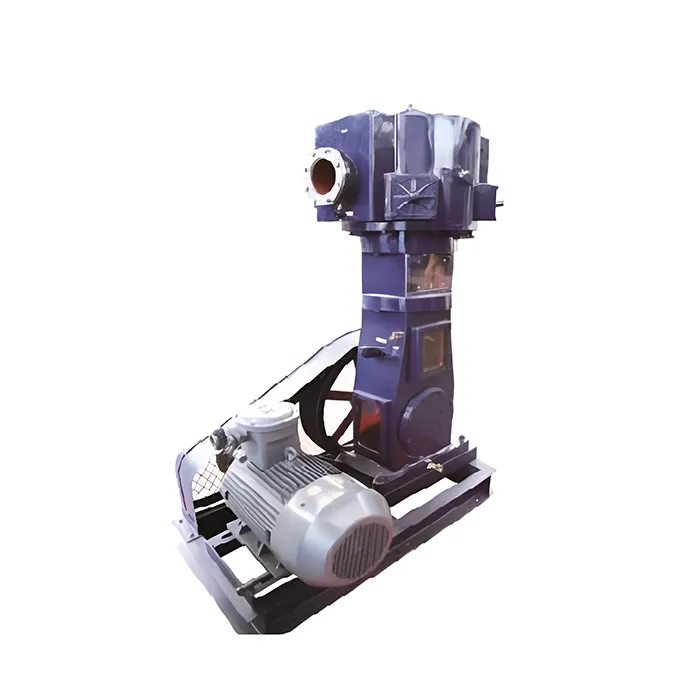
Cavitation in liquid ring vacuum pumps is not an unavoidable consequence—it is preventable with a clear understanding of its causes and the discipline to implement robust design and operational strategies.
By maintaining proper suction pressure, controlling liquid temperature, avoiding flow instability, and adopting modern design and monitoring tools, plant engineers and operators can significantly extend pump life, reduce downtime, and ensure optimal vacuum performance.
Vacuum pump cavitation, particularly in liquid ring systems, should be treated as a design-level consideration, not just a maintenance issue. When addressed early and methodically, cavitation can be virtually eliminated—leading to safer, quieter, and more efficient operations.
Need Help Selecting a Cavitation-Resistant Liquid Ring Vacuum Pump?
Contact our technical support team for application-specific advice and product recommendations tailored to your industrial needs.