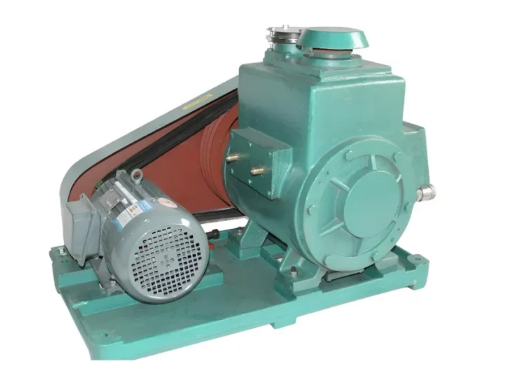
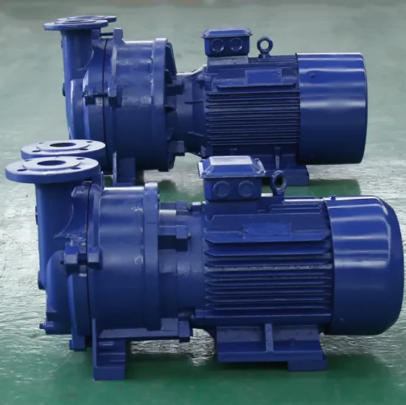
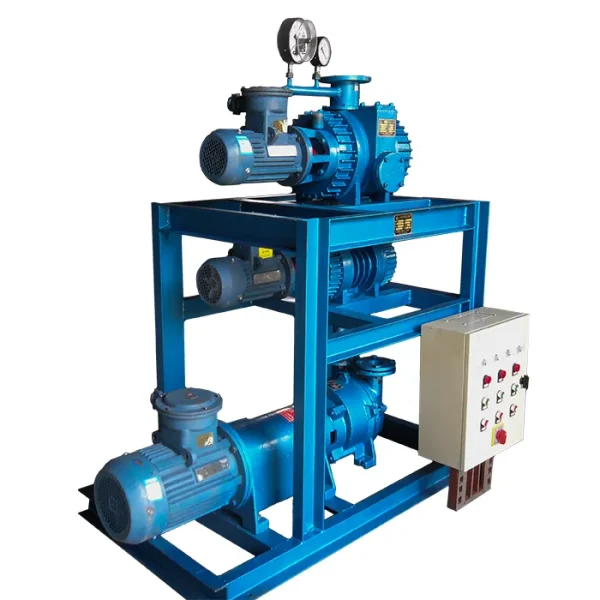
The 2bv vacuum pump features a single-stage, compact design that suits moderate vacuum needs in general industries. In contrast, the 2BE pump offers a two-stage configuration, delivering higher vacuum levels and greater capacity for demanding processes. Stage design, performance, and typical application areas set these pumps apart. Choosing the right model depends on process requirements, installation space, and desired vacuum performance.
Design
Stage Structure
The stage structure stands as a primary difference between the 2BV and 2BE vacuum pumps. The 2bv vacuum pump uses a single-stage design. This configuration allows the pump to generate a moderate vacuum level efficiently. Engineers often select this type for processes that do not require deep vacuum. The single-stage mechanism also means fewer moving parts, which can reduce maintenance needs.
In contrast, the 2BE vacuum pump features a two-stage design. This structure enables the pump to achieve a higher vacuum level and handle larger volumes of gas. The two-stage system works by compressing the gas in two steps, which increases the pump’s overall efficiency and performance. Industries that demand a deeper vacuum or need to process more gas often choose the 2BE model. The two-stage design, however, introduces more complexity and may require more attention during maintenance.
Tip: When selecting a vacuum pump, always consider the required vacuum level and the complexity of the process. Single-stage pumps suit general applications, while two-stage pumps excel in demanding environments.
Size and Build
Size and build also set these pumps apart. The 2bv vacuum pump typically comes in a compact, monoblock construction. This design makes installation straightforward, even in tight spaces. The pump’s lighter weight and smaller footprint allow for flexible placement in various industrial setups. Maintenance tasks become easier due to the accessible layout.
The 2BE vacuum pump, on the other hand, features a larger and more robust build. Its two-stage system requires a bigger housing and additional components. This results in a heavier and bulkier unit. Installation may demand more space and stronger support structures. However, the sturdy construction ensures durability and reliable operation in heavy-duty applications.
A quick comparison table:
| Feature | 2BV Vacuum Pump | 2BE Vacuum Pump |
|---|---|---|
| Stage Structure | Single-stage | Two-stage |
| Build Type | Compact, monoblock | Large, segmented |
| Installation | Easy, flexible | Requires more space |
Performance
Capacity
Capacity stands as a critical factor when comparing vacuum pumps. The 2bv vacuum pump offers a flow rate ranging from 27 to 500 m³/h, which translates to 450 to 8,333 liters per minute. This range supports moderate industrial processes, such as packaging, filtration, and small-scale chemical applications. The 2BE vacuum pump, however, delivers a much higher capacity. Its flow rate spans from 246 to 11,660 m³/h, or 4,100 to 194,333 liters per minute. This significant difference makes the 2BE model suitable for large-scale operations, including power plants, mining, and heavy-duty chemical processing.
| Pump Model | Flow Rate (m³/h) | Flow Rate (L/min) |
|---|---|---|
| 2BV | 27 – 500 | 450 – 8,333 |
| 2BE | 246 – 11,660 | 4,100 – 194,333 |
Vacuum Level
Vacuum level determines how deep a vacuum the pump can achieve. The 2bv vacuum pump reaches a suction pressure as low as 33 mbar, which equals a 97% vacuum. This level meets the needs of most general industrial tasks. The 2BE vacuum pump, with its two-stage design, can achieve even lower ultimate pressures. This feature allows it to handle demanding processes that require a deeper vacuum, such as solvent recovery or high-purity gas handling.
Note: For applications that demand the deepest vacuum levels, the 2BE model provides superior performance due to its advanced stage structure.
Efficiency
Efficiency impacts both operational cost and energy consumption. The 2BV series demonstrates high efficiency, with ratings between 92% and 96%. Power consumption for these models ranges from 0.81 kW to 23 kW, depending on size and capacity. The series also operates at speeds from 970 to 2,880 rpm and maintains water consumption between 2 and 23 liters per minute. Noise levels remain moderate, typically between 62 and 74 dB.
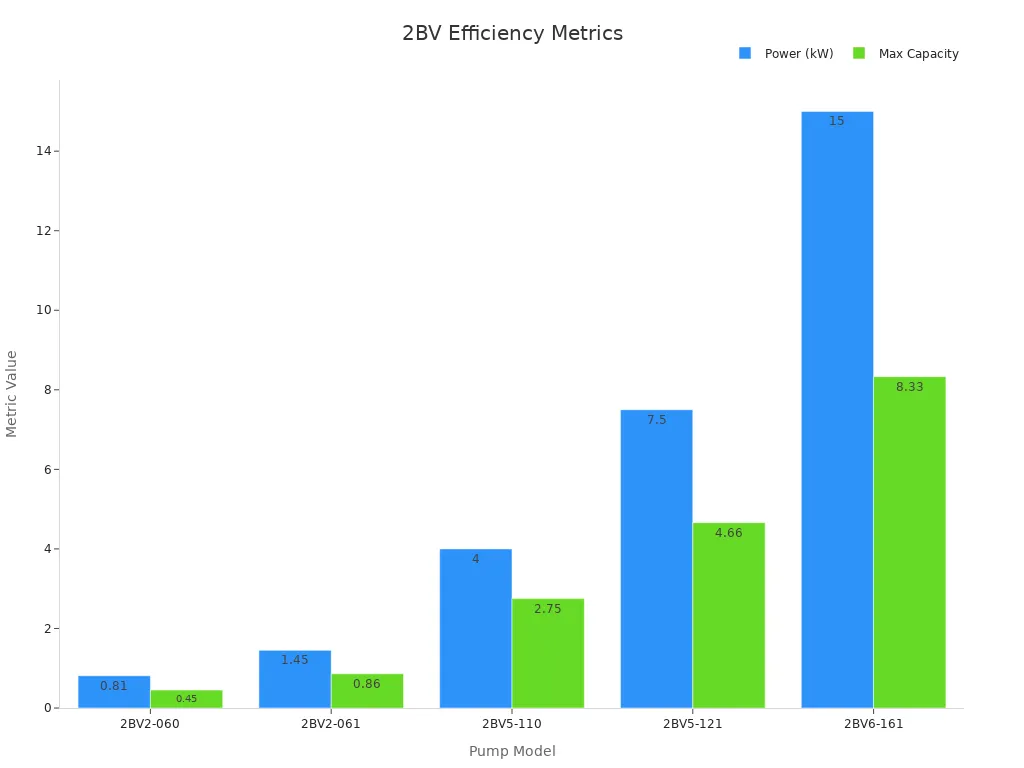
Although explicit efficiency data for the 2BE series is not available, its design focuses on high-capacity and deep-vacuum performance. Operators often select the 2BE model for processes where maximum vacuum and throughput outweigh energy efficiency.
Applications
Typical Uses
Engineers and plant managers select vacuum pumps based on the demands of their processes. The 2BV and 2BE models serve a wide range of industrial applications. Single-stage pumps, such as the 2BV, often handle moderate vacuum tasks. These include packaging, filtration, and small-scale chemical processing. Two-stage pumps, like the 2BE, support more demanding operations. They excel in solvent recovery, power generation, and large-scale chemical manufacturing.
Many industries rely on vacuum pumps for daily operations. Food and beverage processing uses vacuum pumps for packaging and preservation. Water treatment facilities depend on them for degassing and filtration. Pharmaceutical companies require reliable vacuum for drying and distillation. Oil and gas sectors use robust pumps for vapor recovery and refining.
Tip: Selecting the right pump model ensures process stability and product quality. Matching pump capacity and vacuum level to the application prevents downtime and reduces maintenance costs.
Industry Fit
Vacuum pump adoption varies across industries. The following table highlights key statistics and insights:
| Segment Category | Key Statistics & Insights |
|---|---|
| Industry Adoption | Petrochemical & Chemical: ~30% market share; Food & Beverage Processing: significant demand; Water Treatment: notable adoption; Pharmaceutical & Oil & Gas: substantial usage |
| Pump Type | Single-stage pumps dominate with ~60% market share due to simplicity, cost-effectiveness, and reliability in moderate vacuum applications |
| Material Type | Cast iron leads with ~45% share for durability in heavy-duty sectors like oil & gas, petrochemicals, pulp & paper |
| Capacity Range | 600–3,000 m³/h pumps hold ~40% market share, favored for medium to large-scale industrial processes including chemical, pharmaceutical, and food manufacturing |
| Regional Trends | North America leads with ~39.1% market share driven by oil & gas, chemical, and food sectors; Asia-Pacific fastest growing with 5.7% CAGR due to industrialization and water treatment demands |
| Performance Factors | Energy efficiency, handling wet/corrosive gases, hygiene compliance, IoT integration for real-time monitoring and predictive maintenance |
| Key Players Mentioned | Inclusion of 2BV and 2BE models by Zibo Zhaohan Vacuum Pump Co., Ltd. indicates their market relevance |
| Recent Developments | Example: Atlas Copco pumps used in Norwegian fish packaging for hygiene and efficiency, highlighting sector-specific applications |
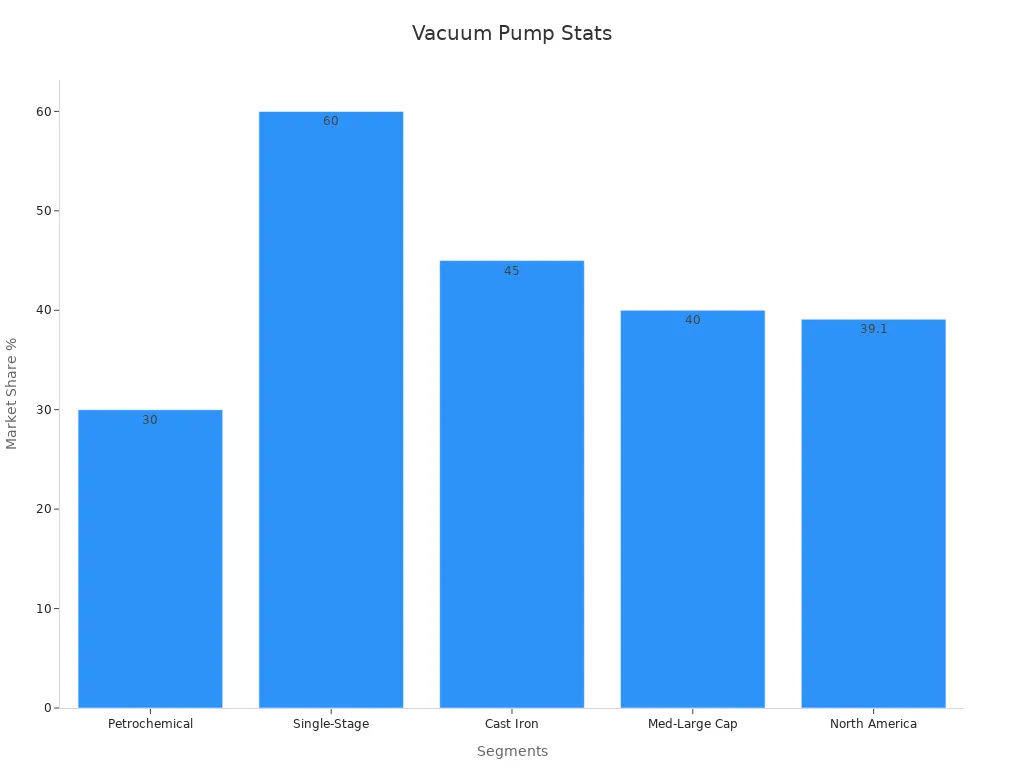
Single-stage pumps remain the preferred choice for most moderate vacuum applications. Their simplicity and cost-effectiveness drive adoption in food, water, and chemical sectors. Two-stage pumps find their place in industries that demand higher vacuum levels and greater throughput. Regional trends show strong growth in Asia-Pacific, fueled by rapid industrialization and water treatment needs.
2bv vacuum pump Features
Advantages
The 2bv vacuum pump offers several notable advantages for industrial users.
- Compact design allows for easy installation in limited spaces. Many facilities benefit from the monoblock structure, which reduces the need for complex mounting systems.
- Simple construction leads to lower maintenance requirements. Fewer moving parts mean less wear and tear over time.
- High operational efficiency helps companies save on energy costs. The 2bv vacuum pump often achieves efficiency ratings above 90%.
- Reliable performance supports a wide range of moderate vacuum applications. Industries such as food processing, pharmaceuticals, and water treatment rely on this pump for daily operations.
- Quiet operation creates a safer and more comfortable work environment. Noise levels usually remain below 75 dB, which meets most industrial standards.
Tip: Many engineers choose the 2bv vacuum pump for its balance of performance, reliability, and ease of use.
Disadvantages
Despite its strengths, the 2bv vacuum pump has some limitations.
- Single-stage design restricts the maximum vacuum level. Processes that require deep vacuum may not achieve optimal results with this model.
- Limited capacity makes it less suitable for large-scale or high-throughput operations. Facilities with demanding requirements often need a more robust solution.
- Material options may not withstand highly corrosive or abrasive environments. Some applications require pumps with specialized coatings or construction.
- The pump may not handle wet or contaminated gases as effectively as more advanced models.
- Upgrades or modifications can be challenging due to the integrated monoblock design.
Note: Users should carefully assess process needs before selecting the 2bv vacuum pump, especially for demanding or specialized applications.
2BE Pump Overview
Advantages
The 2BE vacuum pump stands out in industrial environments that demand high performance and reliability. Its two-stage design enables the pump to achieve deeper vacuum levels and handle larger gas volumes than single-stage models. Operators often select the 2BE pump for applications such as power generation, chemical processing, and mining, where robust performance is essential.
- The pump delivers high capacity, supporting flow rates up to 11,660 m³/h. This capability makes it suitable for large-scale operations.
- The two-stage configuration allows for lower ultimate pressures, which benefits processes requiring deep vacuum.
- The 2BE pump features a durable construction. Manufacturers use heavy-duty materials to ensure long service life, even in harsh conditions.
- The design supports continuous operation. Many facilities rely on the 2BE pump for demanding, round-the-clock processes.
- Maintenance access points and modular components simplify servicing, reducing downtime and operational costs.
Tip: Facilities that require both high throughput and deep vacuum often achieve better results with the 2BE pump compared to single-stage alternatives.
Disadvantages
Despite its strengths, the 2BE vacuum pump presents several challenges in real-world use:
- Users report significant variability in pump effectiveness. Factors such as socket fit, limb geometry, and soft tissue compliance can influence performance.
- Some operators cannot reliably detect when the pump is active, even when it maintains effective vacuum. This issue may lead to perceptual or functional limitations.
- Pressure profiles often show inconsistency. For example, some users observe a steady decrease in air pressure during operation, while others see little change.
- Maintaining consistent vacuum pressure can be difficult in certain cases, which may affect process stability.
- Environmental factors and user compliance play a role in overall system performance. Achieving consistent results across different settings remains complex.
- Short study durations and controlled environments limit the generalizability of performance data. Longer-term, real-world studies are needed to fully assess reliability.
- The pump’s larger size and weight require more installation space and stronger support structures than smaller models.
Note: Operators should evaluate both process requirements and site conditions before selecting the 2BE pump, especially for applications where consistent vacuum performance is critical.
Selection Guide
Decision Factors
Selecting the right vacuum pump requires careful evaluation of several technical and operational factors. Engineers and plant managers should consider the following points when deciding between a 2bv vacuum pump and a 2BE model:
- Required Vacuum Level and Capacity
Assess the process needs for vacuum depth and gas flow rate. The 2BV model suits moderate vacuum and lower capacity, while the 2BE pump delivers higher vacuum and greater throughput. - Installation Space and Build Constraints
Evaluate available space and support structures. The 2BV pump’s compact, monoblock design fits tight spaces. The 2BE pump’s larger, segmented build demands more room and robust mounting. - Process Complexity and Maintenance
Simpler processes benefit from the 2BV’s straightforward design and lower maintenance. Complex or continuous operations may require the advanced features and durability of the 2BE pump. - Water Temperature and Gas Volume Adjustments
Actual water temperature impacts gas flow. When supplementary water temperatures range from 25 to 35°C, users should adjust the gas volume specified in technical documents upward to ensure accurate sizing. - Suction Pipeline Resistance
Long or narrow suction pipelines, especially those with many right-angle elbows, increase inspiratory resistance and reduce efficiency. Using thicker pipelines and minimizing bends helps maintain optimal pump performance. - Exhaust Pressure Considerations
Micro-positive exhaust pressures (0.02 to 0.05 MPa.G) affect both performance and power requirements. As exhaust pressure rises, shaft and drive power must increase. Reviewing performance curves under these conditions ensures proper pump selection. - Rotational Speed and Energy Efficiency
Pumps with lower rotational speeds, especially larger models, offer higher efficiency and lower specific power consumption. Features such as long blades and straight streamlines further reduce energy loss.
Tip: Always match the pump’s technical specifications to the actual operating environment. Adjust for real-world variables like water temperature and pipeline layout to avoid performance shortfalls.
Example Scenarios
Practical scenarios help clarify when to choose each pump type:
- Scenario 1: Food Packaging Facility
A mid-sized food processing plant needs a vacuum pump for packaging lines. The process requires moderate vacuum levels and operates in a space-constrained area. The 2bv vacuum pump provides reliable performance, easy installation, and low maintenance, making it the preferred choice. - Scenario 2: Chemical Manufacturing Plant
A large chemical facility handles solvent recovery and high-volume gas extraction. The process demands deep vacuum and continuous operation. The 2BE vacuum pump, with its two-stage design and high capacity, meets these requirements and ensures stable, round-the-clock performance. - Scenario 3: Mining Operation with Long Suction Pipelines
In a coal mine, engineers must install a vacuum pump far from the process area, resulting in long suction pipelines. To minimize inspiratory resistance, they select a pump with a larger diameter suction line and fewer right-angle bends. They also adjust the gas volume calculations to account for higher water temperatures underground. - Scenario 4: High-Technology Fusion Research
In the Wendelstein 7-X stellarator, operators installed ten cryo-vacuum pumps in the subdivertor region. During hydrogen gas injection tests, the pumps achieved a measured speed of 70 ± 1 m³/s, with estimated speeds up to 93 m³/s depending on operational factors. The pumps maintained neutral gas pressures around 10⁻⁴ mbar throughout the plasma campaign, demonstrating the 2BE pump’s effectiveness in demanding, high-vacuum environments.
| Scenario | Recommended Pump | Key Reason for Selection |
|---|---|---|
| Food packaging line | 2BV | Compact, efficient, easy to maintain |
| Chemical plant, solvent recovery | 2BE | High vacuum, large capacity, durability |
| Mining with long pipelines | 2BE | Handles resistance, robust performance |
| Fusion research facility | 2BE | Deep vacuum, proven in high-tech use |
Note: Each scenario highlights the importance of matching pump features to process demands. Proper selection ensures efficiency, reliability, and long-term cost savings.
The 2BV and 2BE vacuum pumps serve different industrial needs. The 2BV model fits moderate vacuum tasks and limited spaces. The 2BE pump supports high-capacity and deep-vacuum operations. Users should review process requirements, installation space, and maintenance needs before choosing. Selecting the right pump improves efficiency and reliability. Matching pump type to operational demands ensures long-term success.