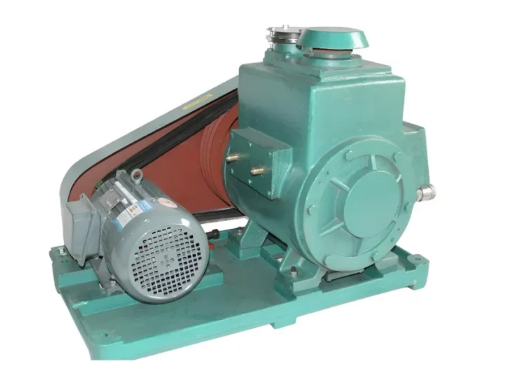
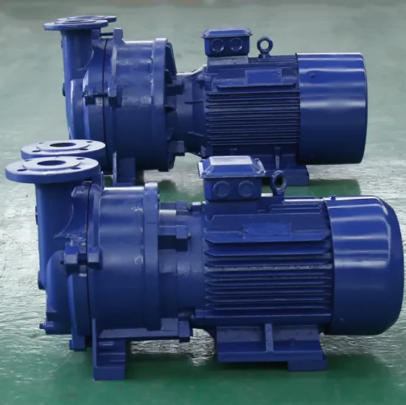
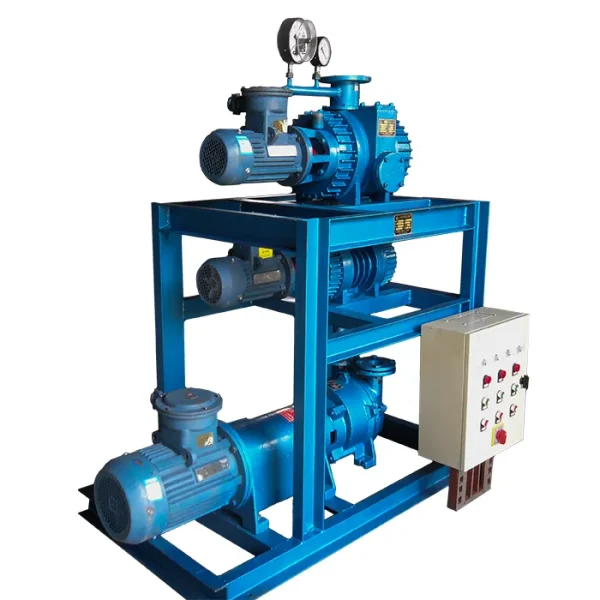
In modern industrial production processes, vacuum technology plays a core role in chemical distillation, pharmaceutical drying, food packaging, power generation, and environmental protection.
As a positive displacement pump, the water ring vacuum pump (also known as a liquid ring vacuum pump) relies on its liquid ring sealing structure and isothermal compression characteristics, offering strong adaptability to complex operating conditions. It is one of the most widely used vacuum pumps across industries.
Whether extracting flammable and explosive gases or handling mixed gases containing moisture and small amounts of dust, this oil-free vacuum pump operates reliably and provides cost-effective vacuum solutions. This article provides a detailed explanation of its structural principles, core advantages, industry applications, and maintenance essentials.
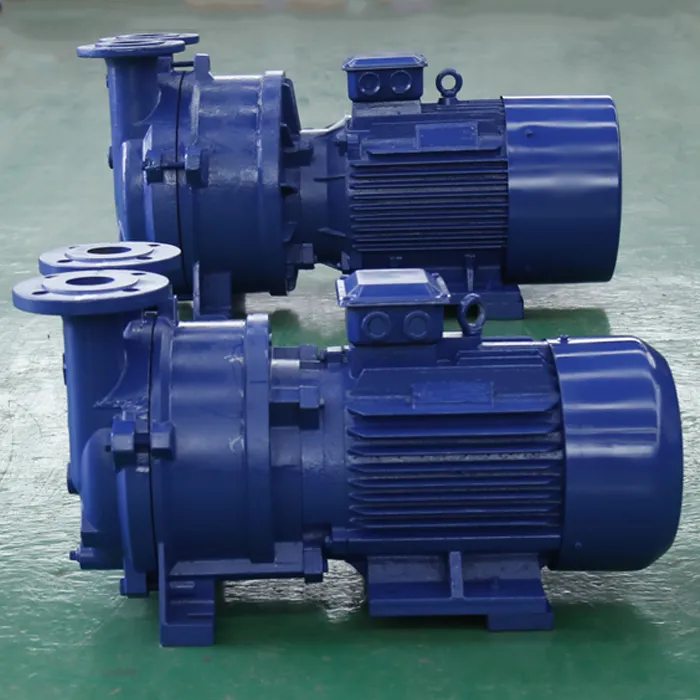
Structure and Working Principle of Water Ring Vacuum Pump
Core Structure
How does a water ring vacuum pump work? The answer begins with its basic components: the impeller, pump casing, and suction/discharge distribution ports. The impeller is eccentrically mounted inside the pump chamber. Before startup, clean water is injected as the sealing working fluid. The pump casing is typically made of cast iron, while the impeller can be manufactured from ductile iron or steel plate welding. The shaft sleeve is equipped with wear-resistant stainless steel material, and high-precision bearings ensure long-term operational accuracy.
Working Principle
The motor drives the impeller to rotate at high speed. Under centrifugal force, the working fluid clings to the inner wall of the pump casing, forming a rotating water ring of uniform thickness. Due to the eccentric impeller arrangement, the volume of the sealed chambers between the blades and the water ring changes periodically, divided into three stages:
Suction: In the first half of the impeller rotation, the chamber volume continuously expands, and negative pressure draws in the process gas.
Compression: In the second half of the impeller rotation, the chamber space contracts, and the gas is gradually compressed by the water ring.
Discharge: When the gas pressure rises to the set value, it is discharged through the exhaust channel.
The entire compression process is isothermal compression, with minimal temperature rise. This makes water ring vacuum pumps particularly suitable for extracting flammable, explosive, and heat-sensitive media. Mainstream single-stage models can achieve an ultimate absolute pressure of 33 hPa, with a wide pumping speed range and power coverage from several kilowatts to hundreds of kilowatts, adaptable to small, medium, and large production lines.
Core Advantages of Water Ring Vacuum Pump
Water ring vacuum pumps offer several distinct advantages over other vacuum technologies, including dry vacuum pumps and oil-sealed pumps:
Simple Structure, Low Maintenance Cost: There is no direct metal-to-metal friction inside, eliminating the need for an oil lubrication system. Only bearings and seals are wear parts. Transmission components are mature and durable, with few failure points and minimal daily maintenance workload. As a result, water ring vacuum pumps require significantly less maintenance than dry vacuum pumps in harsh operating environments.
Isothermal Compression, Strong Adaptability: Low compression temperature rise ensures high safety when handling flammable, explosive, and heat-sensitive gases. It can directly extract exhaust gases containing moisture, light dust, and slurry impurities without clogging or damaging the pump. Unlike dry vacuum pumps, liquid ring technology can tolerate liquid carryover and process contaminants without damage. Its tolerance for harsh inlet conditions far exceeds that of oil-sealed and dry vacuum pumps.
Stable and Environmentally Friendly Operation, Energy Efficient: Suction is continuous and uniform, with overall noise below 85 dB. Working water is recycled, with no oil waste discharge—clean and pollution-free. New-generation models with optimized flow path design consume less power at the same pumping capacity, making them suitable for energy-saving replacements of old equipment.
Application Fields and Key Maintenance Points
Major Application Industries
Water ring vacuum pumps are used across virtually every industry that requires a vacuum environment:
Chemical and Pharmaceutical: Vacuum distillation, material concentration and drying, solvent recovery, negative pressure material conveying, crystallization, and polymerization;
Food and Sugar: Vacuum packaging, raw material dehydration, filtration and purification, milk evaporation;
Power and Metallurgy: Power plant condenser vacuum extraction, mineral processing filtration, smelting exhaust gas treatment;
Environmental Protection and Papermaking: Paper machine dewatering, wastewater and exhaust gas negative pressure collection, sludge dewatering;
Research and Electronics: Laboratory vacuum systems, small-scale vacuum coating.
Two-stage water ring vacuum pumps achieve higher ultimate vacuum and are commonly used in high-negative-pressure processes such as evaporation and impregnation.
Daily Maintenance Points
Proper maintenance is essential for maximizing the service life of water ring vacuum pumps:
Water Supply and Cooling: Regularly replenish working water to ensure adequate liquid ring thickness while removing compression heat and preventing pump overheating. Insufficient water supply will seriously affect performance and service life. Monitor water quality regularly to prevent scale buildup.
Cleaning and Sealing: Keep the pump body and surrounding environment clean. Periodically flush accumulated dust and scale from the pump cavity. Check for mechanical seal leakage; using high-quality mechanical seals can significantly extend leak-free operating cycles.
Lubrication and Bearing Inspection: Replace bearing lubricating oil on schedule (quarterly top-up recommended, with a complete replacement annually). During operation, bearing temperature rise should not exceed 15–20°C above ambient, and the maximum should not exceed 55–60°C.
Cavitation and High-Temperature Protection: When operating at suction pressures below 80 mbar for extended periods, the cavitation protection line must be connected. For outdoor installations, ensure proper shading and heat dissipation to prevent seal aging and bearing damage caused by high temperatures.
Summary
With its simple structure, isothermal compression, tolerance to impurities and moisture, and economical maintenance, the water ring vacuum pump is deeply embedded in vacuum processes across chemical, pharmaceutical, food, power, and environmental protection industries—making it the preferred vacuum equipment for complex inlet conditions. Compared to dry vacuum pumps, water ring pumps offer superior durability in wet and contaminated environments. As industrial energy conservation upgrades accelerate, high-efficiency water ring vacuum pumps are gradually replacing traditional high-energy-consumption models, with broad market prospects.
BoJie Pump is a professional water ring vacuum pump manufacturer and source factory, offering integrated R&D, production, and complete system installation services. Its product range includes single-stage, two-stage vacuum pumps, and large vacuum pump units, with pumping speeds ranging from 2.8 to 353 m³/min. The impeller adopts ductile iron or steel plate welding technology; high-chromium stainless steel shaft sleeves offer a service life five times longer than ordinary materials. Bearings and mechanical seals are imported precision components, and resin sand casting technology enhances sealing and heat dissipation performance.
The company holds multiple utility model patents and has passed ISO 9001, ISO 14001, and ISO 45001 certifications. It can customize corrosion-resistant, explosion-proof, closed-loop circulation vacuum systems, and skid-mounted complete solutions according to customer site conditions, delivering durable and reliable vacuum equipment solutions.