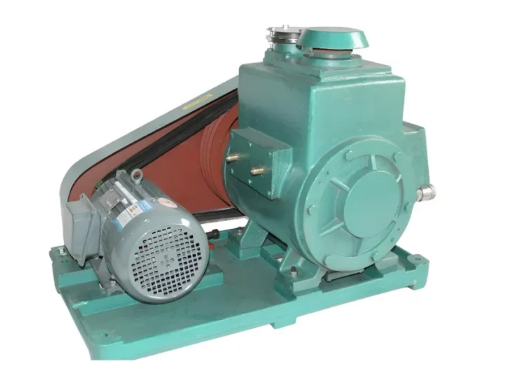
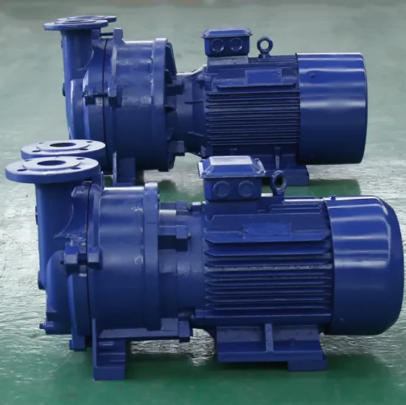
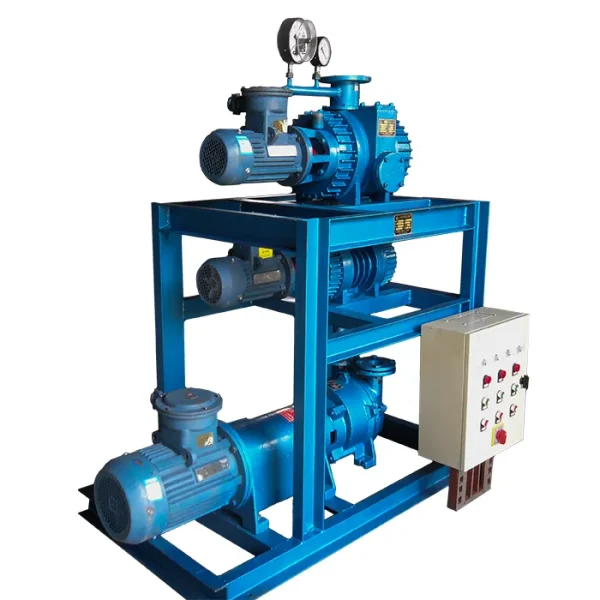
Water ring vacuum pumps are widely used in industries such as chemical, pharmaceutical, food processing, electronics, and metallurgy, playing a crucial role in vacuum extraction processes. Water ring vacuum pumps come in two main types: single stage water ring vacuum pump and two stage water ring vacuum pump. Each type has its own unique features, making them suitable for different industrial applications. This article compares the single stage water ring vacuum pump and the two stage water ring vacuum pump from various perspectives to help you choose the most suitable equipment based on your specific needs.

Overview of Single Stage Water Ring Vacuum Pump
The single stage water ring vacuum pump is a simpler type of water ring vacuum pump, widely used in medium to low vacuum applications. It operates by using the rotor’s rotation to generate centrifugal force, drawing gas into the pump chamber, compressing it through the water ring, and finally discharging the gas. The single stage water ring vacuum pump features a compact structure, easy operation, and convenient maintenance, making it ideal for processes requiring relatively low vacuum levels.
Performance Characteristics:
- Vacuum Range: The single stage water ring vacuum pump typically achieves vacuum levels between 20 Pa and 1000 Pa, suitable for low to medium vacuum requirements.
- Water Consumption: This pump consumes more water, especially during extended operation, requiring a substantial water supply per hour to maintain normal function.
- Energy Efficiency: For applications with lower vacuum demands, the single stage water ring vacuum pump offers high energy efficiency, providing an economical and effective vacuum solution.
- Maintenance: With a simple structure, the single stage water ring vacuum pump has a low failure rate and lower maintenance costs.
Typical Applications:
The single stage water ring vacuum pump is suitable for industrial applications with moderate vacuum needs such as chemical reactor vacuuming, conventional evaporation and concentration, liquid adsorption, and food packaging. It is well-suited for stable operations where extremely low vacuum levels are not required.
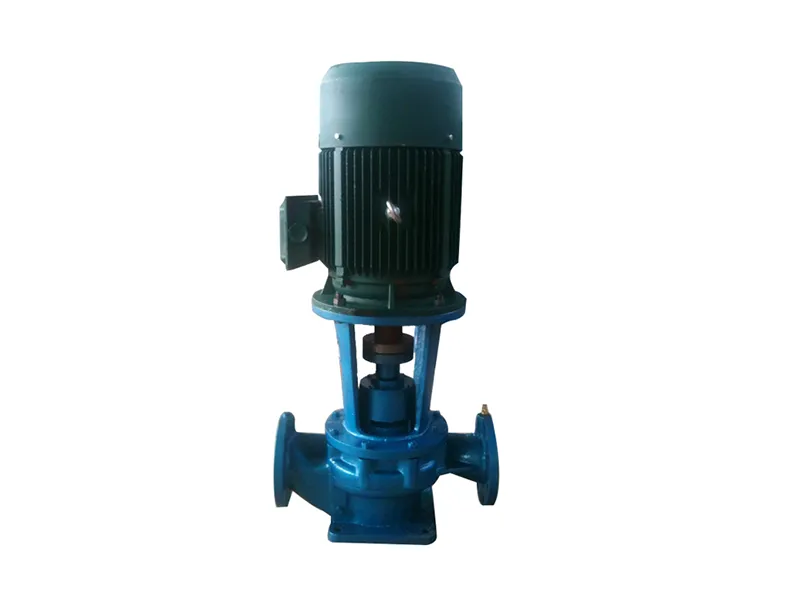
Overview of Two Stage Water Ring Vacuum Pump
The two stage water ring vacuum pump builds upon the single stage design by adding a second compression chamber, allowing gas to be compressed in two stages and thus achieving a lower vacuum level. The two stage water ring vacuum pump is suitable for applications requiring high vacuum. Its working principle is similar to the single stage water ring vacuum pump, but with the added second compression stage, it provides a deeper vacuum.
Performance Characteristics:
- Vacuum Range: The two stage water ring vacuum pump can achieve much lower vacuum levels, typically below 10 Pa, making it ideal for deep vacuum extraction and precision processing that demand high vacuum performance.
- Water Consumption: Compared to the single stage water ring vacuum pump, the two stage pump has relatively lower water consumption, especially during high vacuum operations where water efficiency is improved.
- Energy Efficiency: Although its energy efficiency is generally lower than that of the single stage water ring vacuum pump, the two stage water ring vacuum pump offers superior pumping capacity under high vacuum requirements, making its performance indispensable in such applications.
- Maintenance: With a more complex structure, the two stage water ring vacuum pump incurs higher maintenance costs. Under prolonged high-load operation, it may experience increased wear and potential faults, necessitating more frequent maintenance and care.
Typical Applications:
The two stage water ring vacuum pump is primarily used in industries demanding high vacuum levels, such as semiconductor manufacturing, vacuum drying, evaporation concentration, and deep vacuum extraction. Especially in applications with strict vacuum requirements, the two stage water ring vacuum pump delivers more stable and reliable vacuum performance.
Comparison Analysis of Single Stage Water Ring Vacuum Pump and Two Stage Water Ring Vacuum Pump
1. Vacuum Level and Pumping Capacity
Vacuum level is one of the most critical parameters when selecting a water ring vacuum pump. The single stage water ring vacuum pump typically provides a vacuum range from atmospheric pressure down to about 20 Pa, making it suitable for most low vacuum applications. If your process does not require very high vacuum levels, a single stage water ring vacuum pump can meet your needs. Common applications include water treatment, chemical reactions, and drying processes.
On the other hand, the two stage water ring vacuum pump can achieve vacuum levels of 10 Pa or lower, suitable for deep vacuum extraction. For example, semiconductor manufacturing requires ultra-high vacuum to avoid contamination and ensure precision. The two stage water ring vacuum pump offers a more precise vacuum environment for such demanding fields.
2. Energy Efficiency and Water Consumption
In terms of energy efficiency, the single stage water ring vacuum pump generally performs better, especially in low vacuum applications, offering an efficient and cost-effective pumping solution. However, its water consumption is relatively high, particularly during extended operation, making water use a significant operating cost.
Although the two stage water ring vacuum pump provides deeper vacuum levels, its energy efficiency is slightly lower than the single stage pump. Yet, it is more water-efficient, particularly in high vacuum operations, where water consumption is optimized. This makes the two stage water ring vacuum pump a preferred choice in many high vacuum applications.
3. Maintenance and Costs
Single stage water ring vacuum pumps are simpler in design, resulting in lower failure rates and easier maintenance. They are suitable for small to medium-scale production, with relatively low operating costs and longer maintenance intervals, supporting long-term stable operation without excessive upkeep pressure.
In contrast, the two stage water ring vacuum pump has a more complex structure and requires more frequent maintenance. Under prolonged high-load operation, components are more prone to wear, leading to higher maintenance costs. Additionally, installation and commissioning are more complicated, necessitating greater technical support.
4. Reliability
The single stage water ring vacuum pump offers high reliability due to its simple design and fewer breakdowns. It provides stable pumping performance in low vacuum applications, making it suitable for routine industrial demands with a low failure rate.
While the two stage water ring vacuum pump delivers higher vacuum levels, its complex structure increases the likelihood of faults. Under long-term high-load conditions, its operational stability is comparatively lower, requiring more frequent repairs and maintenance.
How to Choose the Right Water Ring Vacuum Pump
When deciding between a single stage water ring vacuum pump and a two stage water ring vacuum pump, the primary consideration should be your vacuum level requirements. If your application only requires medium to low vacuum and the equipment load is relatively light, a single stage water ring vacuum pump offers a cost-effective solution. However, if you need higher vacuum levels, especially for precision vacuum processes, the two stage water ring vacuum pump is a better fit.
Other important factors to consider include water consumption, energy efficiency, and maintenance needs. For production demands with limited budgets and low vacuum requirements, the single stage water ring vacuum pump may be more attractive. Conversely, in high vacuum fields requiring long-term efficient operation, although the initial investment for a two stage water ring vacuum pump is higher, it delivers superior pumping capacity and better water resource utilization.
Conclusion
Both the single stage water ring vacuum pump and the two stage water ring vacuum pump have unique advantages and specific application scenarios. Choosing the right water ring vacuum pump depends on your actual needs, vacuum requirements, budget, and maintenance considerations. By understanding their performance features, application areas, and operating costs, you can select the water ring vacuum pump that best fits your process demands, improving production efficiency and ensuring stable operation.